Bold Easy Summer Season Coloring Pages
First Impression: Sunny, Simple, and Stitch-Ready
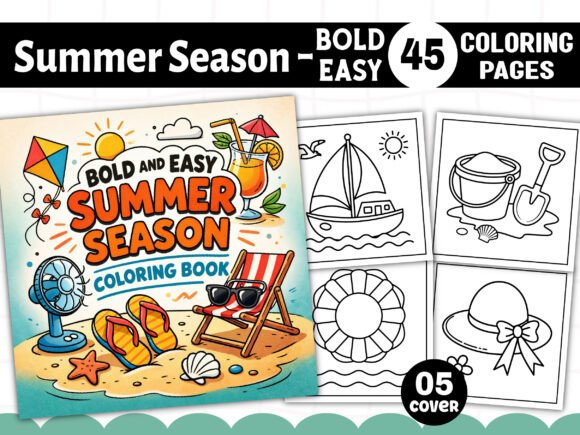
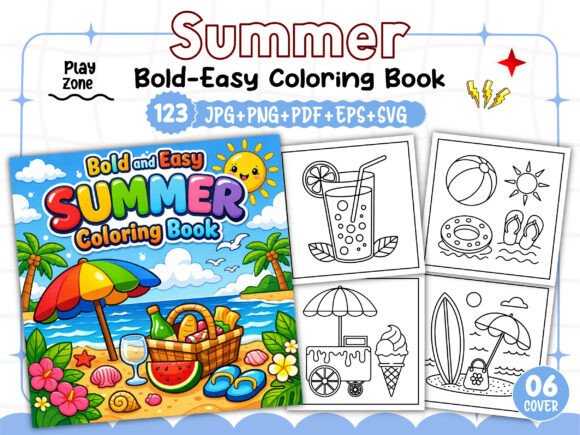
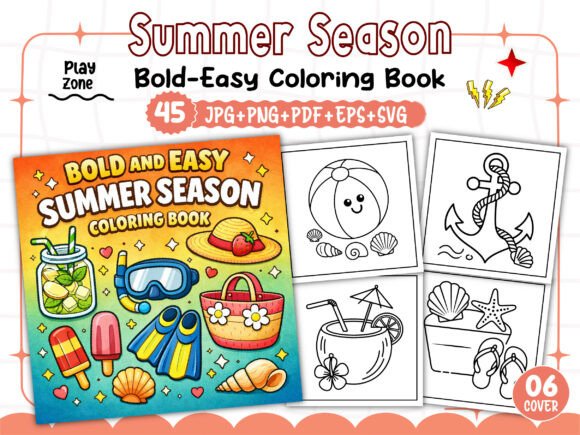
Opening Bold Easy Summer Season Coloring Pages, I immediately felt that familiar summer-light lift — bright, uncomplicated, and full of warmth. These aren’t fussy botanicals or intricate mandalas. They’re clean-lined, high-contrast graphics built around classic seasonal motifs: suns, flip-flops, ice cream cones, palm fronds, and cheerful waves. The bold outlines and generous negative space tell me this set was designed for clarity first — not just coloring, but *translating*. As an embroidery designer who’s stitched hundreds of client projects, I know that kind of intentional simplicity is rare — and valuable.
A Real Project Test: Embroidering a Linen Tote for a Local Boutique
Last week, I prepped a small batch of linen tote bags for a seaside boutique — lightweight fabric, natural tone, meant to hold beach towels and sunscreen. I chose one of the Bold Easy Summer Season Coloring Pages designs: a centered sun with radiating rays and a subtle “Summer” script underneath. Why? Because it scaled beautifully at 4.5 inches wide, held strong visual weight without overcrowding the fabric, and avoided fine interior details that would vanish in fill stitch. After digitizing (yes — these are coloring pages, not embroidery files, so digitization is required), the final stitch-out had crisp satin edges on the sun outline, open running-stitch rays for airiness, and light fill in the lettering — no puckering, no thread nesting. Customers loved how legible and cheerful it looked — not “cute,” but confidently summery.
Where This Design Shines in Real Embroidery Work
- Custom apparel: Works cleanly on cotton tees, lightweight sweatshirts, and woven caps — especially when you keep the design under 5 inches and avoid dense fill areas.
- Tote bag design & tea towel embroidery: The bold lines pop on natural fibers and hold up well after repeated washing.
- Baby embroidery & nursery decor: Soft curves and friendly shapes read well on onesies and pillow covers — no sharp angles or tiny elements that could snag.
- Embroidered patch creation: Clean outer contours make it ideal for turning into iron-on or sew-on patches for camp gear or school bags.
- Printable mockups & digital product previews: Since it includes six PNGs, I used them directly in Canva mockups for my Etsy listing — no redraw needed, excellent resolution for web display.
Where to Proceed With Care
This isn’t a one-size-fits-all embroidery file — it’s a graphics resource, and that matters. Before stitching, consider:
- Hoop size & fabric texture: On textured fabrics like terry cloth or heavy canvas, simplify inner details. That flip-flop’s laces? Better as a single satin border than a multi-pass fill.
- Stretchy or thin fabric: Avoid placing dense fill areas over shoulder seams or neckbands — stabilizer choice becomes critical here.
- Dark fabric backgrounds: The original line art lacks grayscale depth, so test thread color contrast early. A navy tote needs brighter yellow or white thread to match the sun’s energy.
- Curved surfaces (caps, hats): Stick to flatter compositions — the palm frond design wraps awkwardly; the sun or ice cream works far better.
- Commercial embroidery & finished product value: Because these are coloring pages, not pre-digitized embroidery files, your time investment in digitizing affects turnaround and pricing. Factor that in before quoting clients or listing on Etsy.
What It Adds — and Doesn’t Add — to Your Craft Business
Bold Easy Summer Season Coloring Pages doesn’t pretend to be a plug-and-play machine embroidery design. What it *does* offer is reliable, mood-aligned source art — the kind that feels cohesive across a collection, scales predictably, and avoids copyright red flags (no branded characters or licensed icons). For Etsy sellers building seasonal collections, that consistency builds trust. Buyers recognize your “summer line” at a glance — same boldness, same warmth, same handmade polish.
It also supports brand storytelling. When I added one of these designs to a custom-embroidered kitchen towel set, the simplicity let the stitching quality shine — no competing complexity. That elevates perceived value. And because the lines are generous and uncluttered, even beginner embroiderers can achieve professional-looking results with minimal rehooping or thread breaks.
Practical Designer Notes Before You Stitch
- Always test the design on scrap fabric — especially if using rayon thread or blending filaments.
- Review stitch density in your digitizing software — avoid >12,000 stitches for small items like baby onesies.
- Confirm hoop compatibility: most of these scale well between 4x4 and 5x7 hoops, but check corner clearance on curved garments.
- Inspect small details: that “sunshine” script may need slight thickening to prevent breakage on low-thread-count fabrics.
- Test black-and-white mockups — many buyers preview digitally before purchasing your embroidered product.
- Compare light vs. dark fabric backgrounds in your mockup stage — contrast changes everything.
- Use cutaway stabilizer for knits, tear-away for wovens, and always match stabilizer weight to fabric drape.
- Verify licensing: since this is marketed for KDP interiors and digital use, confirm whether finished embroidered goods fall under commercial use before selling on your own platform or at craft fairs.
Final Thought: A Solid Foundation, Not a Finished Product
Bold Easy Summer Season Coloring Pages won’t replace your digitizing workflow — but it will save you hours searching for seasonally appropriate, embroidery-friendly source art. It’s the kind of graphic set that fits naturally into your process: sketch → select → digitize → stitch → sell. No surprises, no pixelation, no licensing guesswork (assuming standard commercial use applies). For craft business owners juggling custom orders, Etsy listings, and holiday deadlines, that reliability is worth more than flash. It’s sunny, simple, and — most importantly — stitch-smart.