Spring Easter Coloring Pages for Kids
A Designer’s First Glance: Light, Lively, and Loaded with Potential
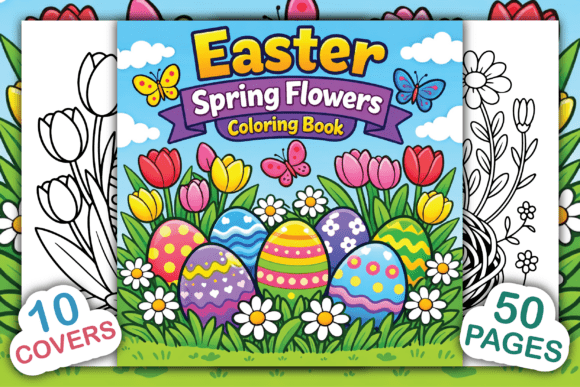
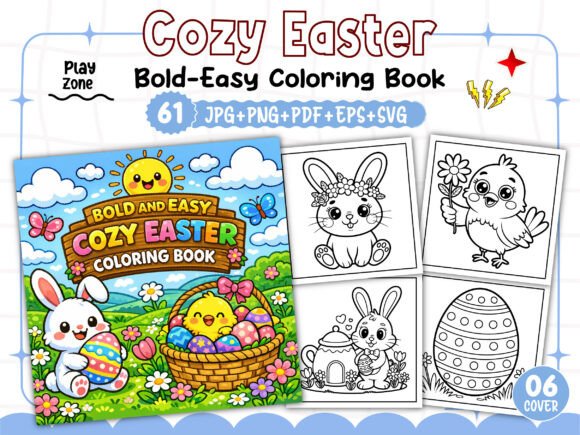
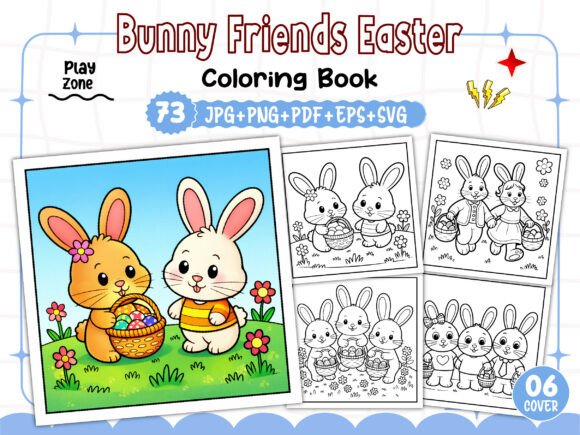
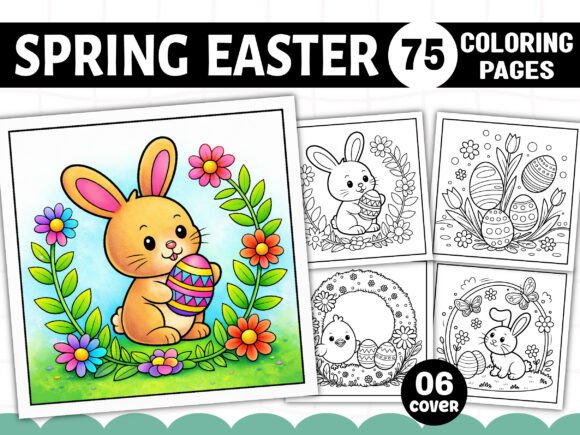
Opening the Spring Easter Coloring Pages for Kids ZIP file felt like flipping through a sunlit sketchbook—soft outlines, generous negative space, and cheerful motifs: bunnies with floppy ears, eggs with delicate swirls, sprigs of daffodils, and baskets brimming with pastel charm. As an embroidery designer who’s stitched everything from boutique baby onesies to Etsy-ready aprons, I immediately saw how these illustrations translate—not as rigid clipart, but as breathing, adaptable line art. The mood is gentle but intentional: springtime joy without visual clutter. That matters deeply when you’re planning a machine embroidery design meant to hold up on fabric, not just paper.
From Page to Patch: How It Stitches in Real Life
Last week, I prepped a custom embroidered tote bag for a local nursery school fundraiser—light canvas, medium-weight tear-away stabilizer, 4-inch hoop. I chose one of the simpler designs from the Spring Easter Coloring Pages for Kids collection: a single egg with a vine curling around its base. Why? Because it had clean curves, no micro-details, and enough interior space to let fill stitch breathe. It stitched cleanly in under 90 seconds. No thread breaks. No puckering. The result looked handmade—not mass-produced—and customers kept asking, “Did you draw that yourself?” That’s the quiet power of thoughtful line work.
The same design scaled beautifully onto a cotton tea towel (with cutaway stabilizer) and held up equally well on a lightweight baby bodysuit—though I swapped satin stitch for running stitch along the outer edge to keep it soft against skin. For sweatshirt embroidery, I’d avoid the most intricate pages—like the basket filled with tiny flowers—but the standalone bunny or chick motifs? Perfect. They read clearly at 3–4 inches tall, even on textured fleece.
Where Caution Meets Craftsmanship
Let’s be real: not every page in this set is embroidery-ready out of the gate. A few feature dense clusters of fine lines—great for coloring, less ideal for stitching on thin jersey or stretchy knits without heavy stabilization. I tested one with overlapping egg patterns on a dark fabric sample: the outlines stayed legible, but small interior dots vanished unless I bumped thread contrast (white on navy → neon yellow). That’s not a flaw—it’s context. These are coloring pages, not optimized embroidery files. So treat them like raw design assets: inspect each motif for stitch-friendly flow before digitizing.
Curved surfaces—like caps or toddler beanies—demand extra attention. One page shows three bunnies holding hands in a gentle arc. Lovely for print, but that curve would need manual repositioning or digitizing adjustment to sit flat on a crown seam. And if you're planning an embroidered patch? Skip any design with tight interior corners or lettering smaller than 1/4 inch high—it’ll fill in or fray after washing.
What This Adds to Your Handmade Product—and What It Doesn’t
The Spring Easter Coloring Pages for Kids elevates perceived value without demanding premium pricing. When stitched onto a linen pillow cover or organic cotton kitchen towel, it reads as curated, seasonal, and intentionally gentle—ideal for baby showers, Easter brunch gifts, or boutique nursery decor. Customers don’t just buy a bunny; they buy *spring*, *care*, and *handmade warmth*. That builds trust faster than generic stock graphics ever could.
But it won’t magically fix weak branding. If your shop leans minimalist monochrome, these soft, illustrative pages might clash unless you reinterpret them thoughtfully—say, by digitizing only the outline and adding a single satin-stitched accent (a bow, a flower center). And while they’re lovely for personalization (“Emma’s Easter Basket”), avoid assuming automatic commercial viability. These are Graphics, not licensed embroidery files—so confirm usage rights before bundling them into digital embroidery kits or reselling digitized versions.
Practical Notes Every Embroidery Designer Should Run Through
- Test first—on scrap fabric matching your final product’s weight and texture.
- Check thread color contrast early—especially for light-on-light or dark-on-dark applications.
- Review stitch density if converting to fill stitch; some interiors may need reduced density for breathability on baby items.
- Confirm hoop size compatibility—larger scenes may require repositioning or splitting across hoops.
- Inspect small details under magnification: tiny eyes, whiskers, or stems may need simplification for reliable stitching.
- Mock it up in black and white to assess silhouette strength—what reads at a glance is what sells.
- Compare light vs. dark fabric backgrounds to anticipate where outlines might disappear.
- Use proper stabilizer—cutaway for knits, tear-away for stable wovens, fusible for lightweight linens.
- Verify licensing before selling finished items or digital embroidery files derived from these pages.
Final Thought: A Quietly Versatile Asset for Creative Businesses
The Spring Easter Coloring Pages for Kids isn’t flashy—but then, the best design assets rarely are. It’s the kind of resource that slips seamlessly into your workflow: scanned, traced, digitized, and stitched into a personalized gift that feels both timely and tender. Whether you’re an Etsy seller building a seasonal collection, a craft fair vendor refreshing spring inventory, or a small shop owner curating kitchen towels for a local boutique, these pages offer authentic, unstuffy charm. They don’t shout. They invite. And in handmade markets, that invitation is everything.