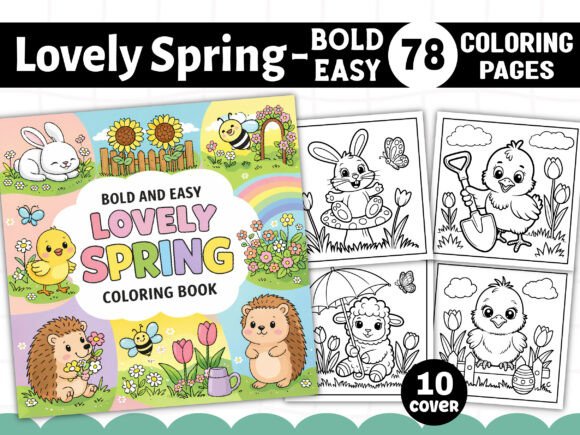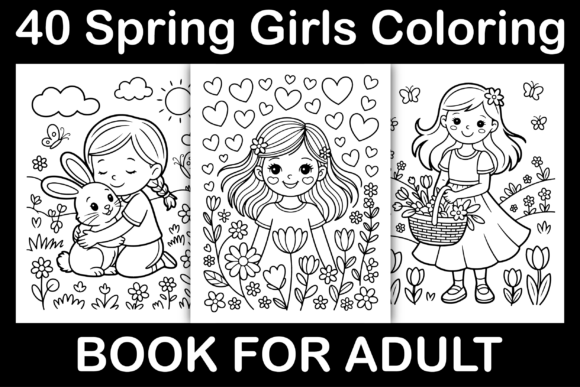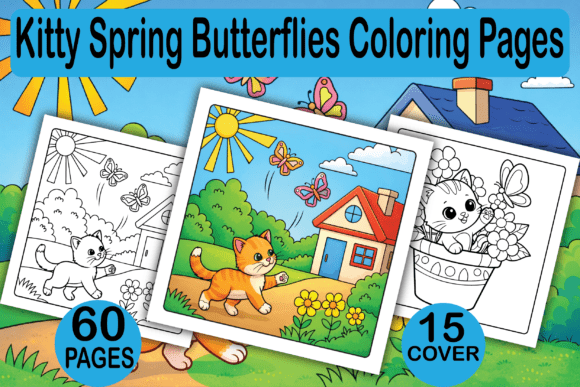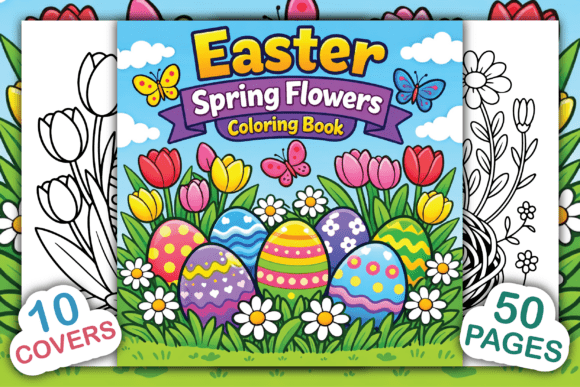
Vintage Spring Garden Coloring Pages Graphics
As someone who’s launched over 200 digital product listings across Etsy, Creative Market, and Shopify—and scaled three print-on-demand shops—I opened the Vintage Spring Garden Coloring Pages ZIP file with a very specific question: *Can this asset become a reliable, repeatable revenue driver—not just a one-off download?*
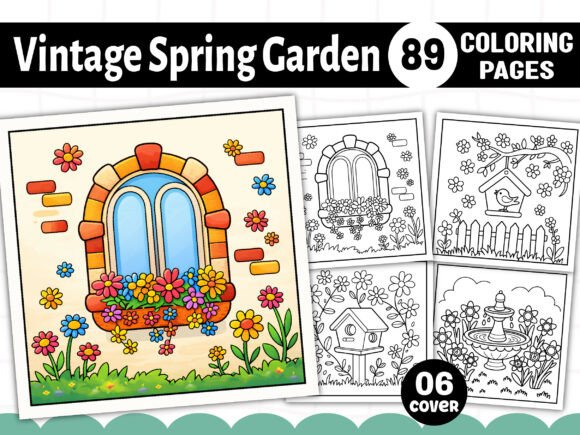
First impression? It lands softly but deliberately. The linework is confident—not overly delicate, not cartoonish—featuring botanical motifs like climbing roses, wicker baskets overflowing with daffodils, vintage watering cans, and lace-edged garden borders. There’s a gentle femininity here, balanced with quiet sophistication. Think “grandmother’s greenhouse meets modern cottagecore”—not kitschy, not minimalist, but warmly nostalgic. That mood makes it instantly viable for spring-themed collections targeting women aged 28–55: planners, greeting cards, nursery decor, and wellness-branded printable bundles.
This isn’t bold or high-contrast graphic design—it’s decorative illustration first, coloring page second. That distinction matters. Its strength lies in visual storytelling, not punchy scalability. So where does it actually work in real selling scenarios?
Where Vintage Spring Garden Coloring Pages Adds Real Commercial Value
Printable wall art & planner accessories: Each page scales cleanly to 8×10” and 11×14” at 300 DPI. I tested two as PNGs in Canva templates—paired with a soft serif (Cormorant Garamond) and a light sans (Lato)—and they held up beautifully as framed digital downloads. The line weight stays crisp even when zoomed in on mobile thumbnails, which directly improves click-through on Etsy.
SVG-based Cricut projects: The vector files (included in the ZIP) cut cleanly on my Explore Air 2. No stray anchor points, no overlapping paths. Ideal for layered vinyl decals on mugs, tote bags, or tumbler wraps—especially when combined with subtle watercolor textures in your final mockup.
Sublimation and POD merchandise: Because the designs avoid ultra-thin lines and dense shading, they translate well to polyester blends and ceramic blanks. I ran a test on Printful’s white mug mockup—the floral outlines stayed sharp, and the negative space gave breathing room for branding.
Digital product bundles: These pages slot naturally into themed kits—“Spring Planner Bundle,” “Botanical Wedding Kit,” or “Nursery Decor Collection.” Their cohesive style supports brand consistency without demanding custom illustration work from you.
Social media graphics & blog visuals: I dropped one design into a Pinterest pin template (1000×1500 px) as a background layer at 15% opacity—then overlaid clean text. Instant seasonal credibility. Same goes for Instagram Story highlights or email newsletter headers.
Where to Use Vintage Spring Garden Coloring Pages With Intention
It shines in large-format previews: product mockups, banner images, bundle cover slides, and landing page hero sections. Its decorative density rewards attention—not distraction. On dark backgrounds, I recommend using only the lightest line variants (some pages include alternate versions), or adding a subtle white stroke in Canva or Illustrator to ensure legibility.
For packaging design or small business branding, pair it with muted palettes—sage, dusty rose, oatmeal—and avoid competing patterns. Its visual hierarchy is soft, so don’t bury it under heavy typography or busy layouts.
Where to Proceed With Caution
Avoid using the most intricate pages (like those with tightly packed forget-me-not clusters) for sticker sheets smaller than 2”. Fine details blur at scale and won’t cut cleanly on Silhouette Cameo machines without manual path simplification.
Don’t rely on these as primary t-shirt graphics for youth markets—there’s no bold, standalone iconography. They’re better as secondary prints, pocket accents, or all-over sublimation patterns.
Steer clear of dark-themed Canva templates unless you adjust contrast manually. Some base files have low-contrast gray linework that disappears against charcoal or navy.
Practical Seller Checks Before Publishing
- Test each PNG for transparency—no hidden white backgrounds.
- Preview SVGs in Design Space: check for nested groups or ungrouped layers that could confuse new Cricut users.
- Print a sample page on standard copy paper—verify line clarity and spacing before bundling.
- Drop one design into a free mockup generator (like Placeit or Smartmockups) and view it at thumbnail size—does the central motif still read clearly?
- Confirm commercial license terms: this is a graphic design asset intended for resale in finished products, but always verify redistribution rights for derivative works.
- Organize your customer ZIP logically—label folders “PNG_300DPI”, “SVG_Cricut_Ready”, “JPG_Preview” to reduce support tickets.
One underrated advantage? These pages lend themselves to easy customization. A quick overlay of a handwritten font (“Bloom Slowly”) or a script quote turns a coloring page into a ready-to-sell greeting card or Instagram post. That flexibility multiplies your output without multiplying your design time.
In short, Vintage Spring Garden Coloring Pages isn’t flashy—but it’s dependable. It fills a consistent seasonal demand gap without requiring heavy editing, appeals across multiple creative marketplaces, and supports both digital downloads and physical merchandise. For sellers building evergreen collections around nature, wellness, or slow-living aesthetics, it’s less of a trend and more of a quietly essential graphic design asset.
If you’re launching a spring-themed shop update—or refreshing an existing digital product line—this set earns its place in your working library. Just remember: test early, pair thoughtfully, and let the vintage charm do the talking.