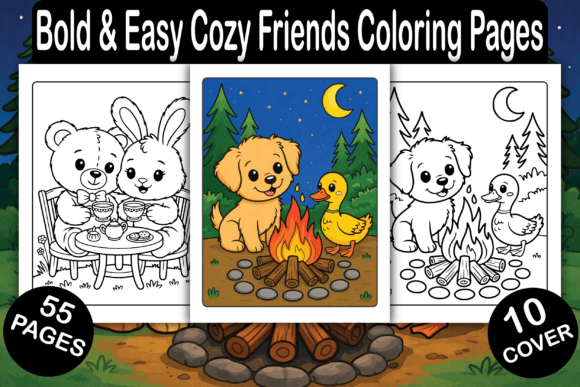
Bold Easy Cozy Friends Coloring Pages
First Impressions: Warm, Friendly, and Embroidery-Ready
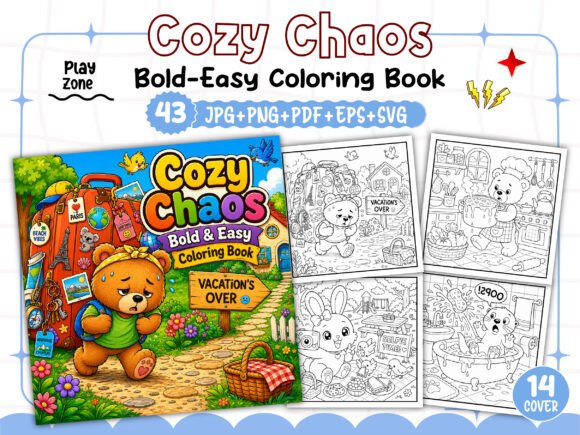
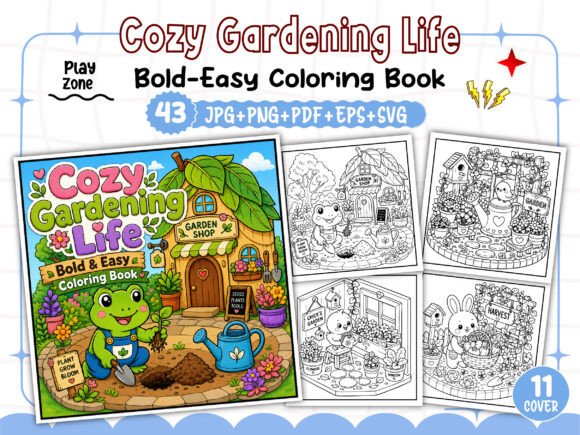
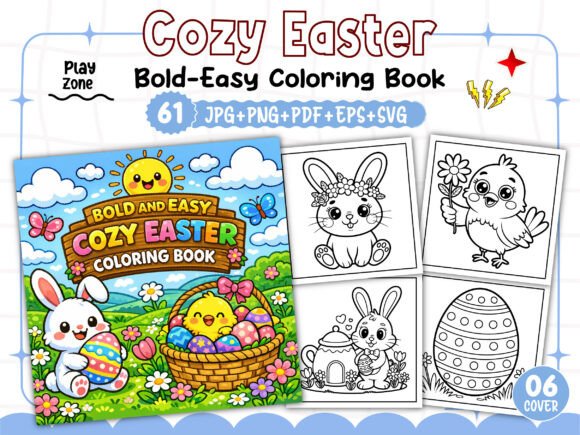
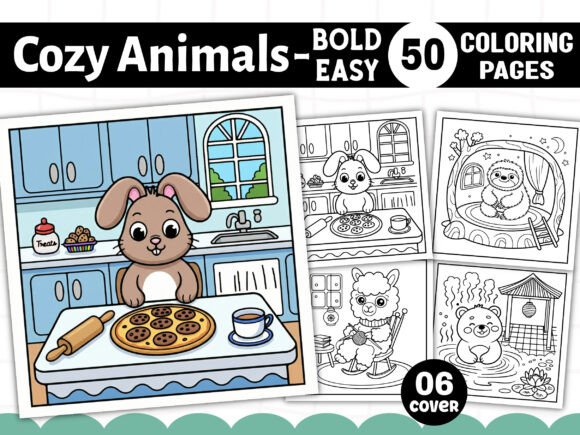
When I opened Bold Easy Cozy Friends Coloring Pages, my first thought wasn’t “cute” — it was “stitchable.” As someone who’s digitized over 300 embroidery files and shipped embroidered goods to Etsy buyers, boutique shops, and custom clients for eight years, I scan designs for clarity, rhythm, and adaptability — not just charm. These 55 pages deliver a consistent visual language: thick outlines, generous negative space, gentle curves, and expressive but uncomplicated characters. Think friendly woodland animals, smiling mugs, cozy socks, sleepy cats, and soft-hearted monsters — all drawn with confident, unbroken lines that translate beautifully into satin stitch or bold fill stitch.
A Real Project Test: Custom Embroidered Tote Bags for a Local Bookstore
Last month, I used three motifs from Bold Easy Cozy Friends Coloring Pages to create limited-edition tote bags for a neighborhood indie bookstore’s holiday pop-up. We chose the “Reading Sloth,” “Stack of Books,” and “Cozy Mug” designs — all scaled to 4.2" wide on natural canvas totes. Why these? Because their bold outlines held up under medium-density fill stitching, their shapes read clearly at arm’s length, and their warmth aligned with the shop’s brand voice. Customers didn’t just buy the bag — they paused, smiled, pointed, and asked, “Is that new?” That kind of emotional resonance is rare in mass-produced graphics. It’s what makes Bold Easy Cozy Friends Coloring Pages feel handmade even before you stitch a single thread.
Where It Shines (and Where to Pause)
Bold Easy Cozy Friends Coloring Pages excels in projects where legibility, comfort, and approachability matter most:
- Custom apparel: Works beautifully on sweatshirts, crewnecks, and relaxed-fit tees — especially when stitched with matte cotton or rayon thread for a soft hand.
- Personalized gifts: Baby onesies, pillow covers, and tea towels gain instant charm without overwhelming detail.
- Embroidered patches: Clean outlines make clean cut-and-sew or iron-on patch conversion straightforward.
- Holiday and nursery decor: The cozy, low-stress aesthetic reads as calming — ideal for baby blankets, wall hangings, and keepsake ornaments.
- Craft fair and Etsy listings: Buyers respond well to cohesive, mood-driven collections like this — it builds trust faster than random clipart.
But here’s what I watched closely during testing:
- Small hoop sizes: Some motifs include nested details (like tiny hearts inside mugs or layered ears). If your hoop is under 4", simplify or omit inner elements — or digitize them separately.
- Textured or stretchy fabric: On terry cloth towels or ribbed knit caps, use tear-away + cutaway stabilizer combo and reduce stitch density slightly. The bold outlines forgive minor puckering better than fine-line designs.
- Dark fabric backgrounds: These coloring pages were clearly designed for light-to-medium contrast. When stitching on navy or charcoal, test thread colors carefully — avoid near-matching tones that disappear.
- Curved surfaces (caps, aprons): Stick to mid-size motifs (3–5") and avoid top-heavy compositions. The “Cozy Bear” with oversized paws, for example, anchors well on a curved apron pocket; the “Floating Cupcake” doesn’t.
What It Adds to Your Finished Product — Beyond Aesthetics
Using Bold Easy Cozy Friends Coloring Pages isn’t just about putting a design on fabric — it’s about reinforcing your brand’s quiet confidence. These aren’t loud, trend-chasing graphics. They’re grounded. That translates directly to customer perception: a handmade product feels more intentional, a personalized gift feels more thoughtful, and a small shop product feels more curated. I’ve seen repeat buyers specifically request “that cozy friend style” — proof that consistency in visual personality builds recognition faster than any logo.
It also lifts perceived value without adding complexity. A simple embroidered mug motif on a linen tea towel sells for $28 vs. $18 for generic florals — not because it’s fancier, but because it invites connection. That’s the power of warm, bold, easy-to-read design.
Practical Notes Every Embroidery Designer Should Check
Before cutting fabric or uploading to your embroidery machine:
- Run a test stitch on scrap fabric — same weight and weave as your final project.
- Check thread color contrast in both natural and artificial light. What looks rich on screen may mute on oat-colored linen.
- Review stitch density — if the original coloring page has dense interior shading, consider simplifying to open fill or outline-only for breathability on baby items.
- Confirm your hoop size fits the largest motif comfortably — don’t force a 6" design into a 5" hoop and risk distortion.
- Inspect small details: eyes, whiskers, tiny text (if any) — they may need manual cleanup or slight enlargement for reliable stitchout.
- Test black-and-white mockups to verify silhouette strength — if it reads well in grayscale, it’ll hold up in embroidery.
- Compare how the design lands on light vs. dark fabric using digital mockups — subtle shifts in line weight matter.
- Use appropriate stabilizer: cutaway for knits, tear-away for stable wovens, and fusible + tear-away for lightweight linens.
- Verify licensing terms — since Bold Easy Cozy Friends Coloring Pages is marketed for KDP, POD, and commercial use, confirm whether finished embroidered items or derivative digital products require attribution or have usage limits.
Final Thought: Not Just Coloring Pages — Design Assets with Personality
Bold Easy Cozy Friends Coloring Pages stands out because it bridges two worlds: the accessibility of printable coloring sheets and the functional integrity of professional design assets. It doesn’t try to be everything — no photorealistic fur, no intricate mandalas, no trendy typography. Instead, it leans into its strengths: boldness, ease, and genuine coziness. For embroidery designers building a signature look, for Etsy sellers refining their seasonal collections, and for craft businesses wanting to stand out with warmth instead of noise — this is the kind of graphic that earns repeat use, not one-off experiments.