Flower Water Can Coloring Pages
A Designer’s First Glance: Charm Without Clutter
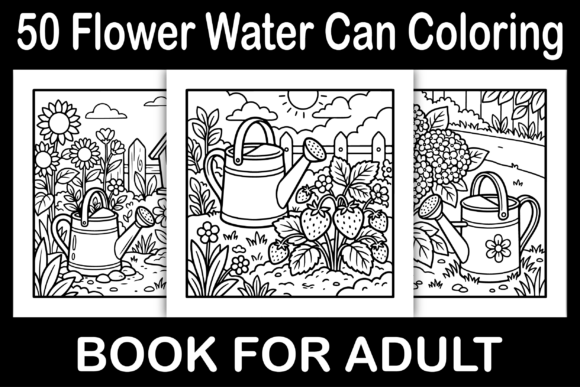
Opening Flower Water Can Coloring Pages, I immediately notice its gentle rhythm — a single water can tilted just so, draped with soft, unfurling florals and leafy vines. It’s not fussy or over-rendered; there’s breathing room between stems and petals, and the outlines are clean but expressive — not rigid line-art, not sketchy chaos. That balance matters deeply when translating to embroidery. This isn’t a design that screams for attention; it whispers warmth, quiet care, and handmade intention. Think cottagecore kitchen towels, baby onesies for spring showers, or an embroidered patch on a denim apron at a local flower shop. It feels like something you’d stitch for a friend — personal, unhurried, full of quiet joy.
From Page to Stitch: How It Holds Up in Real Projects
I tested Flower Water Can Coloring Pages as a foundation for a custom embroidered tote bag — cotton canvas, medium-weight stabilizer, satin-stitched outlines with subtle fill-stitch shading in the can’s base and flower centers. The result? Crisp, legible, and surprisingly dimensional. Because the original lines have consistent weight and gentle curves (no ultra-thin spindles or needle-thin connectors), the satin stitch stayed stable without puckering. On a sweatshirt? Yes — but only if you use cutaway stabilizer and reduce density slightly in the vine areas. The design’s moderate detail level means it scales well from 3.5" wide on a child’s cap to 5.5" across a pillow cover without losing clarity.
For baby embroidery or nursery decor, it shines: no sharp angles, no tiny isolated elements prone to snagging, and the water can motif reads instantly as nurturing and tender. As a holiday embroidery piece — say, stitched onto linen tea towels for Mother’s Day — it avoids seasonal cliché while still feeling celebratory and thoughtful. And for Etsy sellers building cohesive digital embroidery bundles, this design slots naturally beside herb sprigs, watering cans, or garden gloves — it’s thematic without being literal or limiting.
Where Caution Meets Craftsmanship
That said, Flower Water Can Coloring Pages isn’t universally forgiving. On stretchy fabric like lightweight knits? Proceed carefully — those long, flowing vine lines can distort if hooping tension isn’t even or if stabilizer choice is too light. On dark fabric, test thread contrast first: pale mint or butter yellow may vanish unless you add a white underlay or switch to ivory or sage. And avoid cramming it into small hoops (under 4") — the subtle curve of the can handle and the layered petal groupings need space to resolve cleanly in stitch.
Also note: because it’s a coloring page graphic — not a pre-digitized embroidery file — you’ll need to digitize it yourself or work with a digitizer. That means reviewing stitch direction, avoiding dense fill areas where thread buildup could stiffen thin cotton or linen, and checking how running stitches behave along curved stems. Tiny corners (like where the vine meets the spout) may require manual cleanup in your embroidery software to prevent skipped stitches or thread breaks.
Design Integrity in Finished Products
What makes Flower Water Can Coloring Pages stand out commercially isn’t just prettiness — it’s coherence. When stitched cleanly, it elevates perceived value: customers see intention, not mass production. A personalized gift with this motif feels curated, not generic. For small shop owners, it supports brand consistency — imagine it repeated subtly on packaging tags, embroidered on staff aprons, or scaled down as a logo accent. It builds trust because it looks hand-drawn, not algorithmically generated. And unlike overly complex graphics, it doesn’t distract from the product itself — whether that’s a hand-dyed tea towel or a custom baby blanket.
Practical Notes Every Embroidery Designer Should Keep Handy
- Always test on scrap fabric first — especially with textured weaves or blends, since line clarity shifts dramatically.
- Check thread color contrast on both light and dark backgrounds before stitching final pieces.
- Review stitch density — high-density fills in floral centers may overwhelm lightweight fabrics; consider open-fill alternatives.
- Confirm hoop size compatibility — the natural spread of this design works best in 4"x4" or larger hoops.
- Inspect small details digitally before sending to machine: ensure no stray vector points or overlapping paths.
- Test black-and-white mockups — if it reads well without color, your embroidery will too.
- Use appropriate stabilizer: tear-away for stable wovens, cutaway for knits or delicate linens.
- Verify licensing terms before selling finished items or bundling as part of a commercial embroidery collection.
Final Thought: A Quiet Workhorse, Not a Flashy Gimmick
Flower Water Can Coloring Pages won’t dominate a tradeshow booth — and that’s its strength. It’s the kind of design that earns repeat orders, shows up thoughtfully in boutique merchandise, and feels right on a handmade product meant to be used, washed, and loved. It respects the craftsperson’s time (clean lines, logical flow) and the customer’s eye (calm, recognizable, emotionally resonant). Whether you’re digitizing for a client’s wedding gift line, building a seasonal Etsy collection, or embroidering your own small-batch kitchen goods — this is a grounded, versatile, quietly confident starting point. Just remember: it’s a coloring page, not a finished embroidery file. Your skill, judgment, and attention to fabric and stitch will determine how beautifully it translates. And that’s exactly how good design should be — inviting, honest, and ready for real work.